How to Build a Weekly Thinking Digest (Without Sharing Anything)
A practical guide to creating your own private weekly review system. Look back on your thoughts, spot patterns, and build momentum—without an audience.
You write things down. Ideas, worries, observations, plans. But when was the last time you looked back at what you wrote last week?
Most of us don't. We capture thoughts and move on. But there's value in pausing once a week to review what you've been thinking about.
A weekly thinking digest is simple: it's a regular look back at your recent journal entries to spot patterns, track progress, and see what's been occupying your mind.
And the best part? It's completely private. No sharing required.
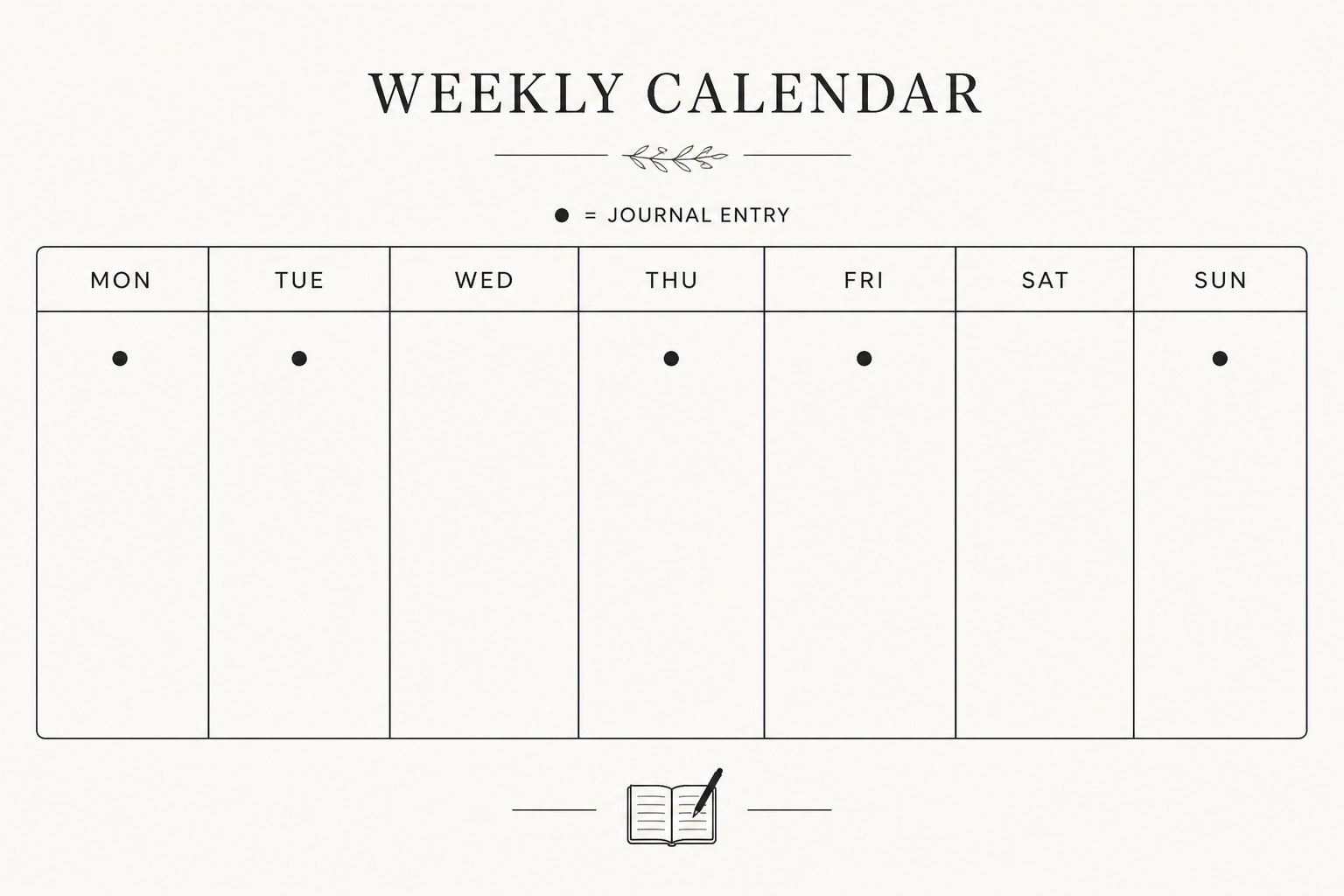
Why a weekly digest matters
Writing is only half the equation. Looking back is where the real insight lives.
Here's what a weekly review helps you see:
- Recurring thoughts you didn't realize were patterns
- Progress on things you've been working through
- Themes that emerged over the week
- What actually mattered versus what you thought would matter
Without a review system, your entries become scattered snapshots. With one, they become a connected story.
How to build your weekly digest
You don't need special tools or complex systems. Just a consistent process that works for you.
Step 1: Pick a day and time
Choose the same day each week. Sunday evening and Friday afternoon are popular choices, but any day works.
What matters is consistency. Put it on your calendar. Make it non-negotiable for a few weeks until it becomes habit.
Block 15-30 minutes. That's all you need.
Step 2: Gather your entries
Collect everything you wrote in the last seven days. If you're using Ivory Journal, this is automatic—your entries are already organized by date and fully searchable.
If you're using paper or scattered digital notes, gather them now. Don't skip this step.
Step 3: Read through the week
Read each entry from the past week. Don't edit or judge. Just read.
As you go, ask yourself:
- What keeps coming up?
- What surprised me?
- What did I worry about that didn't happen?
- What did I work through?
- What questions am I still sitting with?
Take light notes. Jot down words or phrases that stand out.
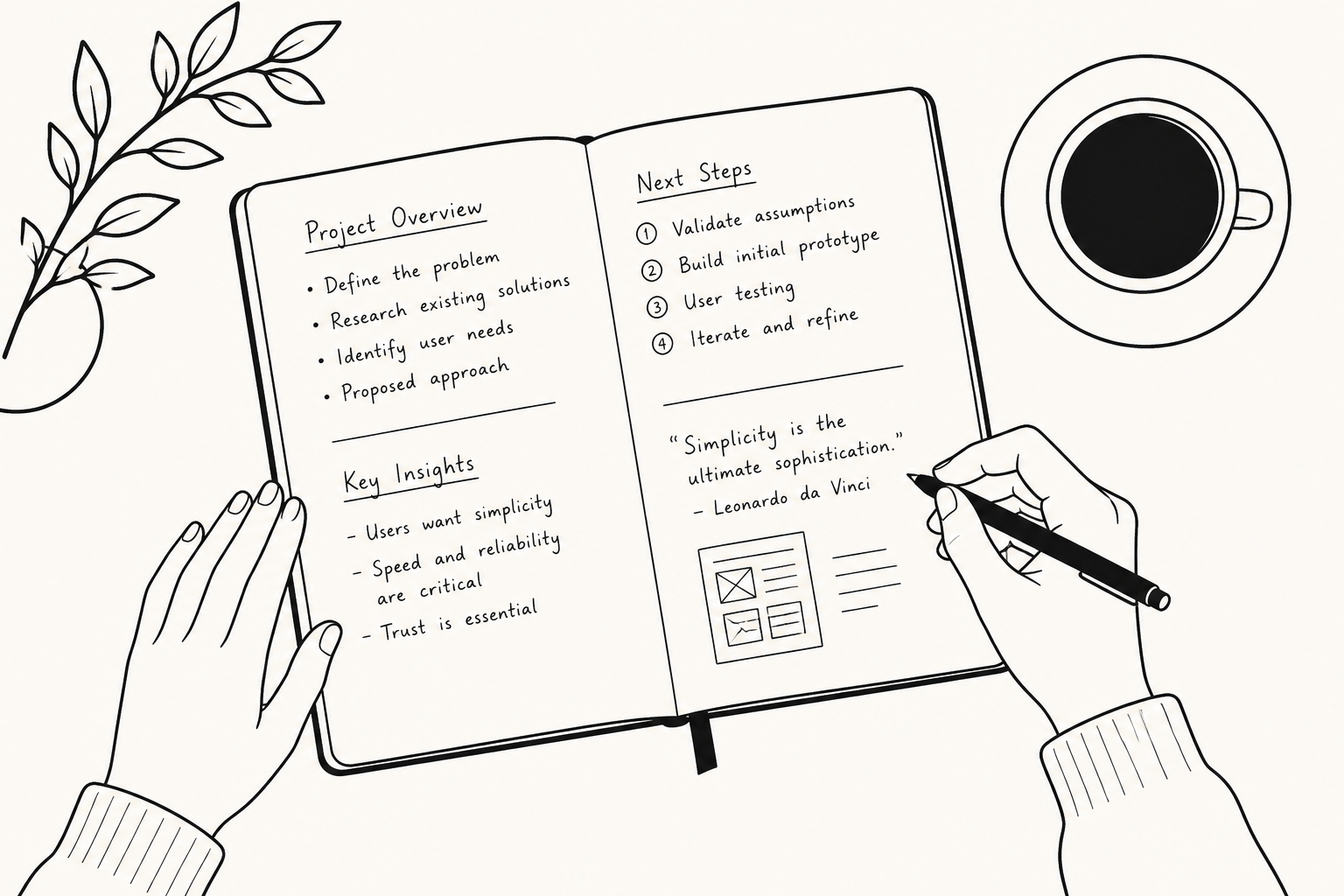
Step 4: Write your digest
Now write a short summary of the week. This doesn't need to be long—one or two paragraphs is enough.
Include:
- Main themes: What was this week mostly about?
- Patterns: What thoughts or feelings showed up repeatedly?
- Progress: What moved forward, even a little?
- What's unresolved: What are you still thinking about?
This isn't a performance. No one else will read it. Write it in whatever format makes sense to you.
Some people write bullet points. Others write paragraphs. Some just highlight key entries and add a sentence or two. All approaches work.
Step 5: Look for what you'd miss otherwise
This is the most valuable part. As you review, notice:
- Emotional patterns: Did you feel anxious every Monday? Energized every evening? Drained after certain activities?
- Decision-making insights: Were you overthinking something that resolved quickly? Did clarity emerge over time?
- Values signals: What mattered to you this week? What got your attention?
- Course corrections: Is there something you want to adjust going forward?
These insights only emerge when you zoom out. You can't see them from inside a single day.
Make it your own
Your weekly digest doesn't have to follow a template. It should fit how you think and work.
Here are a few variations:
The highlight approach
Just pick your most important entry from the week and read it again. Add a sentence about why it matters.
The question-based approach
Answer the same set of questions every week:
- What's one thing I learned about myself?
- What surprised me?
- What am I grateful for?
- What do I want to carry into next week?
The themes approach
Identify 2-3 themes that emerged and write a sentence or two about each one.
The automatic approach (Ivory Journal)
Use a tool that generates your digest automatically. Ivory Journal does this—it pulls your last seven days of entries and shows patterns, recurring topics, and key moments without you having to manually review.
This is especially useful when you've been writing a lot or when you want to spot patterns you might miss.
Want to see how this works? Try Ivory Journal's automatic weekly digest feature.
Common pitfalls (and how to avoid them)
Pitfall 1: Making it too formal
Your digest isn't homework. It's a tool for you. Keep it casual and useful, not polished.
Pitfall 2: Skipping weeks
Consistency beats perfection. If you miss a week, just pick up the next one. Don't try to catch up on multiple weeks at once.
Pitfall 3: Judging past entries
You'll read things you wrote that feel silly or repetitive. That's normal. Don't critique yourself. Just observe.
Pitfall 4: Not acting on insights
If you notice a pattern—like recurring anxiety about something specific—that's useful data. Don't just note it and move on. Ask yourself what you want to do with that information.
What this looks like in practice
Here's a real example (anonymized):
Week of September 1-7
Main theme: Decision fatigue about the project proposal. Came up in four different entries, always framed differently but same core concern.
Pattern: Most anxious on Sunday nights. Most clear-headed on Wednesday mornings.
Progress: By Thursday, I'd talked through it with someone and the decision became obvious. Reminder to externalize sooner next time.
Unresolved: Still thinking about the weekend plans question. Not urgent, but sitting with it.
That's it. No literary polish. Just a useful summary.
Start building your system this week
You don't need to design the perfect system before you start. Just try one review this week and see what happens.
Pick a time. Review your last seven days of entries. Write a few sentences about what you notice.
If you've been using the 7 prompts we shared, your weekly digest becomes even more powerful—you'll have structured thinking to review rather than scattered thoughts.
If you haven't been journaling yet, this is a good reason to start. A weekly digest only works if you're writing regularly. Even brief entries add up.
The long-term benefit
After a few months of weekly digests, something interesting happens: you can look back at your digests and see longer patterns.
How you were thinking in January versus July. What you worried about that resolved. What stayed consistent. What changed completely.
This is the real value. Not just weekly reflection, but a record of how your thinking evolves over time.
And because it's entirely private, you can be honest in a way you couldn't be if you were writing for others.
Make this automatic
If you want a calm, private place to write and review your thoughts each week, Ivory Journal is built for this.
- Private entries: Everything you write stays private
- Weekly digest: Automatic summaries of your last seven days
- Search: Find any thought instantly
- No social features: Just you and your thinking
Start your weekly practice—it's free to try.
Start your thinking practice
Try Ivory Journal—a private, distraction-free space for your thoughts.
Get started