Q&A: How Often Should I Keep a Private Thinking Journal?
How often should you journal privately? Daily isn't required. A practical cadence for a thinking practice that sticks—without streaks, shame, or an audience.
People ask for a magic number: every day, three times a week, once on Sundays. The honest answer is quieter than a streak counter.
Journal as often as you can keep doing it without dreading the page—and often enough that your own thinking doesn't go fuzzy between entries. For most people that lands somewhere between a few times a week and a short daily note. Privacy helps: when there's no audience, you can miss a day without performing recovery.
Q: Do I need to journal every day?
A: No. Daily writing is great if it stays light and useful. It is not a moral requirement.
A private thinking journal works when you show up with something real to process—not when you force empty lines to protect a streak. If daily means two honest sentences, keep it. If daily means guilt and skipped weeks after one miss, drop the daily rule.
Plenty of people get a durable practice from three or four sessions a week. What matters is that entries stay honest and findable later—especially when you skim them in a weekly thinking digest.
Q: Is a few times a week enough?
A: For most people, yes. A few short sessions per week is frequent enough to notice patterns and forgiving enough to survive a busy calendar.
Think of it as a middle path: more contact than a monthly dump, less pressure than "never miss a day." Pair it with a loose anchor—after coffee, after a hard meeting, before sleep—so the cadence has a home without becoming a second job.
If you want prompts when the blank page stalls, seven private prompts keep sessions short and useful.
Q: What if I only write when something is hard?
A: That still counts. Crisis journaling is a real mode.
Just know the tradeoff: if you only open the journal under stress, you miss quieter data—small wins, mild friction, the decision you almost made. Those are often where patterns show up.
A practical mix: keep "when it hurts" as always-allowed, and add one lighter check-in on calmer days. Eight everyday moments are doorways that aren't only for emergencies.
Q: What if I miss days—did I fail?
A: Missing a day is normal. Quitting because you missed a day is the failure mode.
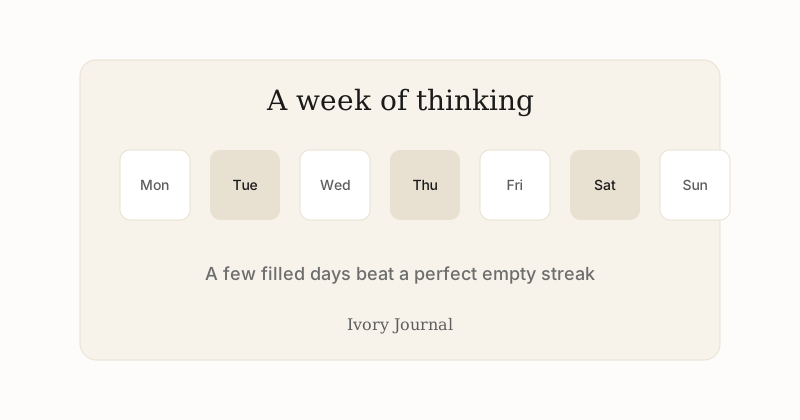
Streaks can motivate, then punish. In a private practice, there is nobody to impress with perfect squares. Resume at the next natural moment. One gap is noise. If you miss a stretch, restart with the smallest entry that still feels true—one paragraph, or even one line.
Habits stick when the bar is low enough to clear on an ordinary Tuesday. Five habits that actually stick are built around that idea.
Q: How long should each entry be?
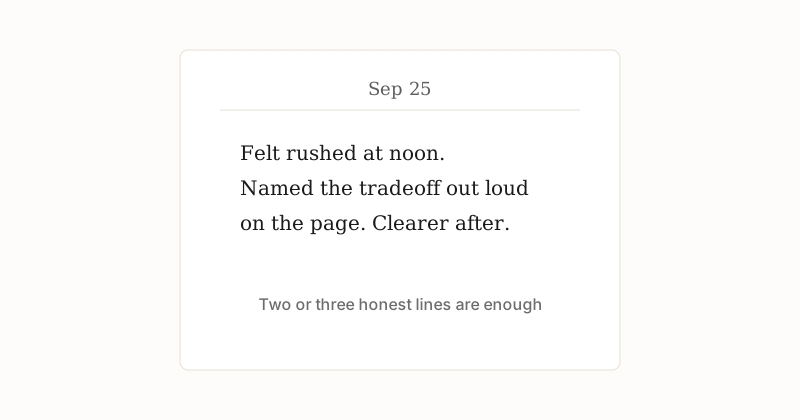
A: As short as honesty allows. Two or three clear sentences often beat a page of going through the motions.
There is no minimum word count that makes reflection "count." If you have ten minutes, use them. If you have ninety seconds, name what happened and how you feel about it. Length is optional; clarity is the point.
When a decision is consequential, give it a little more structure—see how to keep a private decision journal—but still finish in one sitting.
Q: Morning or evening—does timing matter?
A: Timing matters for follow-through, not for virtue.
Morning writing clears fog before the day stacks up. Evening writing processes what happened. Midday works if that's when you can be alone with the page. Attach journaling to something you already do—commute end, lunch close, lights out—so you don't renegotiate the schedule every time.
Pick the slot you'll actually keep. You can change it later.
Q: When should I write more often?
A: Turn up the cadence during transitions and high-stakes stretches—not forever, just while the signal is loud.
Good reasons to write more:
- A live decision with lasting tradeoffs
- A job, city, or relationship shift
- A week when the same worry keeps looping
- Recovery after a miss, when you want the practice warm again
When life calms, dial back without apology. Cadence is a dial, not a badge.
Q: How do I know my cadence is working?
A: Look for usefulness, not perfection.
Your cadence is working if:
- You can find recent thoughts without digging through a junk drawer of notes
- You sometimes change course because writing clarified a tradeoff
- Missing a day doesn't end the practice
- Looking back weekly or monthly still feels worthwhile
If journaling feels like homework you dodge, lower the frequency or the length. If weeks blur together with no record, nudge the cadence up slightly—or capture moments as they happen instead of waiting for a long session.
Still unsure whether this belongs in a notes app? The Q&A on separate apps vs notes covers that split.
So what's a sensible default?
Start here, then adjust:
- Three short sessions a week as a default target—not a law.
- Extra entries when decisions or hard weeks show up.
- One weekly look-back (even ten minutes) so the practice compounds.
- No streak theater—resume without a speech to yourself.
If you want a lighter on-ramp, the private thinking journal checklist gets a space ready in about fifteen minutes.
A calm place for the cadence you choose
Ivory Journal is built for private thinking—entries, search, weekly digest, no feed, no followers. Keep the rhythm that fits your life.
Start writing in Ivory Journal when you're ready.
Related reading
Start your thinking practice
Try Ivory Journal—a private, distraction-free space for your thoughts.
Get started