6 Quiet Ways to Review a Month of Private Journal Entries
Review a month of private journal entries without drowning in pages. Six calm sampling methods—plus a short meta-note to close the loop.
A month of private entries can feel like too much to reread and too valuable to ignore.
You don't need to read every line. You need a few quiet ways to sample what you wrote—so patterns show up without turning review into homework.
Here are six methods that stay light. Use one. Or rotate. Privacy helps: when there's no audience, looking back is just for you.
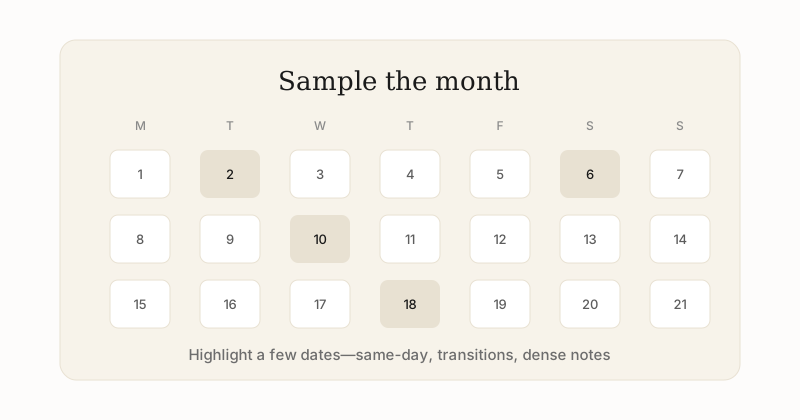
1. Same-date / anniversary sampling
Open entries from this day last month—or the same date last year if you have them.
You're not hunting for a perfect narrative. You're asking a smaller question: What was I carrying then, and what feels different now?
Anniversary-style sampling works because the calendar does the choosing. Birthdays, a move, a job start or end, a hard date you already mark—those anchors return on their own. Skip a year if you need to. The ritual still holds.
If a full month feels heavy, start with three same-dates and stop. That is still a review.
2. Transition sampling
Pick one known change from the month—a decision, a move, a new role, a conversation that shifted something—and read the entries a few days before and after it.
Transitions compress signal. The week around a change often holds the doubt, the tradeoff, and the first quiet after. Skimming that window beats skimming thirty random days.
If you keep a private decision journal, pull those decision entries first. Then expand only if something still feels unfinished.
3. Long-entry / dense-entry skim
Sort or scroll for the unusually long notes—the ones where you slowed down.
Long entries are often peaks: a hard week, a looping worry, a choice that wouldn't leave you alone. You don't need every short check-in. Read the dense pages for tone and themes, then move on.
If nothing looks "long," pick the entries you almost didn't want to open. Resistance is a decent highlighter.
4. Keyword / theme search for one question
Choose one word or phrase for the session—tired, decide, family, ship, enough—and search only for that.
One question keeps review from becoming a second job. You're not cataloging your whole month. You're following a single thread across dates.
Write down what repeats and what surprised you. Then close the search. Next month you can pick a different word.
Searchable private entries make this easier than flipping a notebook by hand—especially when the same theme shows up under different wording. Soft meaning-search in a private thinking journal is built for that kind of look-back, without a feed or followers.
5. Weekly digest pass
Before you expand to a full month, skim your weeks.
Four short weekly passes beat one exhausting monthly marathon. Read each week's notes (or digests) and jot one line: what kept returning, what resolved, what is still open.
We wrote a full guide on how to build a weekly thinking digest. If you already review weekly—one of the habits that actually stick—the monthly look-back is mostly stitching those four lines together.
6. Write a short meta / capstone entry
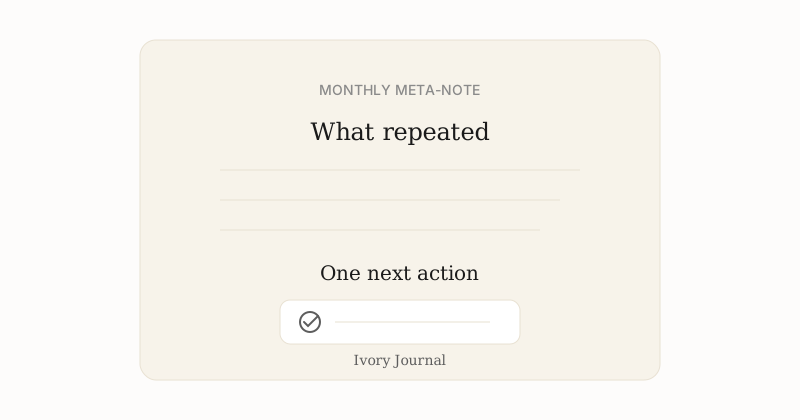
After 15–20 minutes of review, write one new entry. Keep it short.
Name what repeated. Name one thing that shifted. Name one next action—or one thing you're deliberately not fixing this month.
That capstone is the review's payoff. Without it, looking back can feel like wandering. With it, the month has a quiet closing line you can find later.
How to use these without overdoing it
You don't need all six every month.
- Short on time: same-date sampling + a five-line meta-note.
- After a big change: transition sampling + keyword search on the decision word.
- Feeling fuzzy: weekly digest pass, then one dense-entry skim.
- Curious about cadence: the Q&A on how often to journal pairs well with a light monthly look-back.
Eight everyday moments are useful when you want more raw material next month—not more pressure this month.
A calm place to look back
Ivory Journal is a private thinking journal—entries, search, weekly digests, no social layer. Soft tools for review when you want them; free to start when you're ready.
Browse more on the blog, or start writing in Ivory Journal when a quiet look-back sounds useful.
Related reading
- 5 Private Journaling Habits That Actually Stick
- How to Build a Weekly Thinking Digest
- How to Keep a Private Decision Journal
- 8 Moments for a Private Thinking Journal
- Q&A: How Often Should I Keep a Private Thinking Journal?
- Ultimate Guide to a Private Thinking Journal
- Back to all posts
- Ivory Journal home
Start your thinking practice
Try Ivory Journal—a private, distraction-free space for your thoughts.
Get started